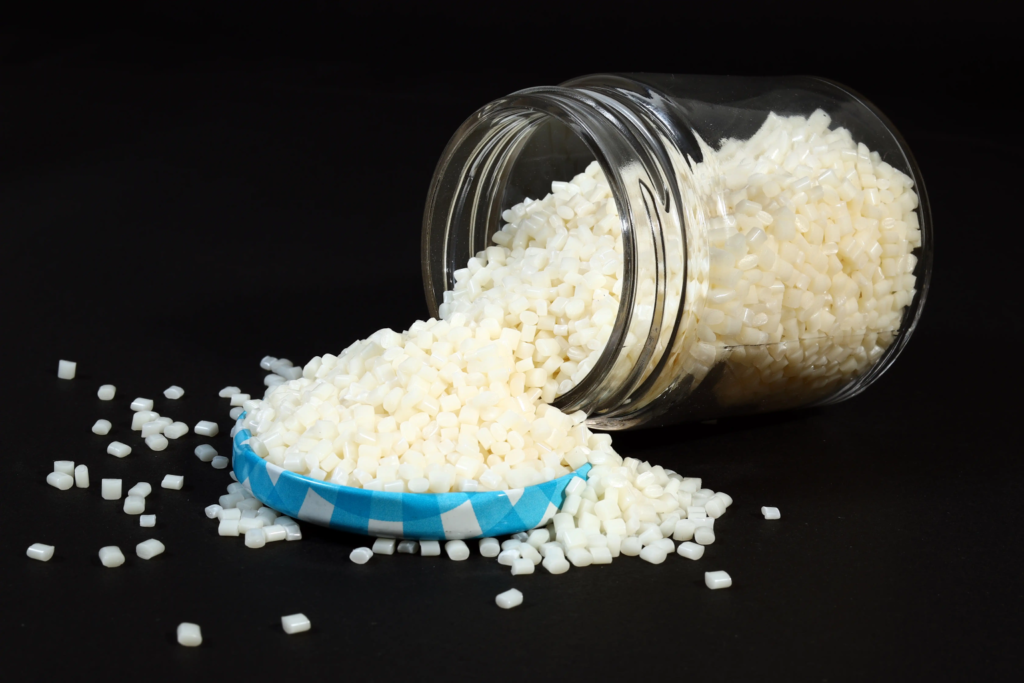
Acrylonitrile Butadiene Styrene (ABS)
Acrylonitrile Butadiene Styrene (ABS) is a widely used thermoplastic polymer found in various applications, including automotive parts, toys, electronics, and household appliances.
ABS is synthesized by polymerizing three monomers: Acrylonitrile, butadiene, and styrene. This process results in a tough, rigid, and impact-resistant material that is lightweight and easy to mold. ABS boasts a high melting point, excellent chemical resistance, and durability, making it a preferred choice in many industries.
One of ABS’s key advantages is its exceptional impact resistance, making it ideal for applications requiring toughness and durability. ABS offers strong thermal stability, enabling it to retain its form and performance over a wide range of temperatures. In addition, it provides outstanding electrical insulation, which makes it highly suitable for use in electronic and electrical applications.
Applications:
* Fabric Coating: Used in specialized coatings for robust textiles requiring high toughness and rigidity, such as stiffened belts or technical fabrics.
* Composite Fibers: Integrated into melt-spun fibers to create composite yarns for enhanced dimensional stability and mechanical properties in technical textiles.
* Laminating Agent: Employed as a binder or laminating polymer for non-woven fabrics requiring superior structural integrity and wear resistance.
* Molding Components: Used for producing durable, rigid components within textile machinery (e.g., bobbins, guides, or casing parts) due to its toughness and chemical resistance to processing fluids (though this is secondary to direct fabric/yarn application).
Key Features:
* Exceptional impact resistance, improving product durability.
* Excellent structural strength and rigidity for dependable component performance.
* Good chemical resistance to common textile processing agents like acids and alkalis.
* Maintains stability and performance across a useful temperature range for processing equipment.